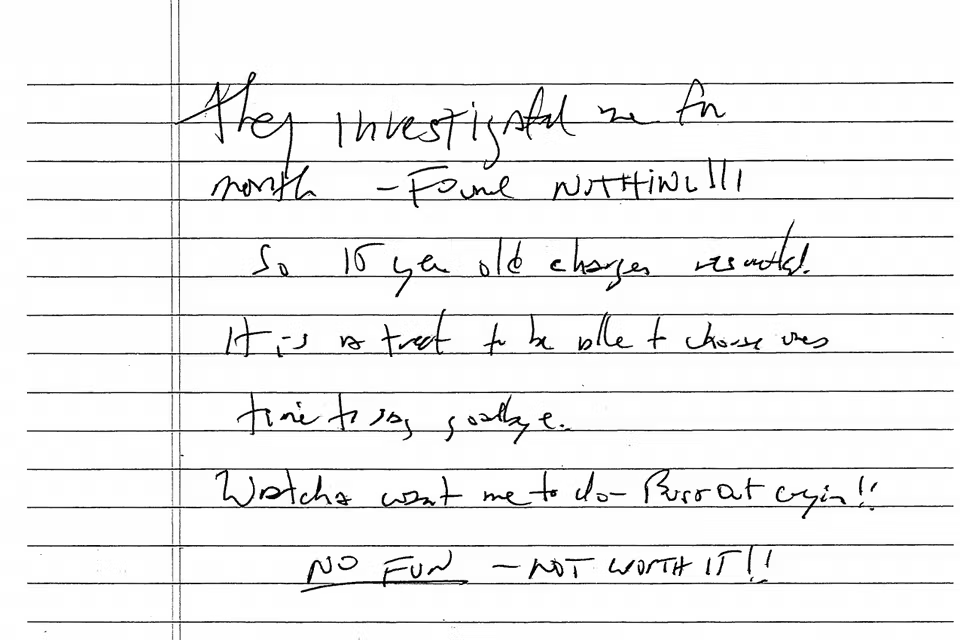
During the years I worked for police forensic laboratory, I examined hundreds of suicide notes. The main objective was to determine whether the handwriting on the note actually belonged to the deceased person. Since I was planning to write a scientific article about suicide notes, I approached these letters from a broader perspective. I tried to analyze every possible aspect of them: the length or brevity of the note, the type of pen used, the paper it was written on, what the writer talked about, the person’s emotional state, the expressions they used, and so on. I aimed to identify both their common and differing characteristics.
Suicide notes shared dozens of common features. However, later on, I no longer felt inclined to turn these findings into a scientific publication. Because whenever I read them, I felt deeply unhappy. What I was reading were often highly emotional writings produced during what was perhaps the most difficult moment of a person’s life. Perhaps I also thought that using their words in a publication, even for scientific purposes, might not be ethically appropriate.
The text published in newspapers as Epstein suicide letter brought me back to those days. Inevitably, I found myself making certain evaluations about the letter/note. I would like to emphasize this: if I had continued my scientific research and included Epstein suicide letter in my study, it would certainly have stood out as an unusual letter with characteristics very different from the others.
Eyüp Aydoğdu
Forensic Document Examiner
Netherlands